Introduction
Spring dressing is less about predicting the weather than preparing for it to change. A mild morning can turn sunny, windy or rainy, and an outfit suited to only one set of conditions can quickly become uncomfortable. Well-planned men’s spring outfits make room for those changes without sacrificing comfort.
A reliable approach is to wear breathable layers that work together and are easy to add or remove. The best men’s spring outfits balance comfort, proportion and adaptability rather than relying on a single statement piece.
Think of transitional dressing as an exercise in editing: choose a few useful garments, give each a purpose and avoid adding bulk when a lighter layer will do. This is the foundation of transitional menswear, and it helps make men’s spring outfits practical from morning to evening.
Analysis of the pieces
Start with a base layer, since it is likely to stay on all day. A cotton T-shirt works in dry, mild weather. For more coverage without the bulk of a heavy sweatshirt, try a fine-gauge merino or cotton knit. A crisp shirt is another option, as long as it feels comfortable under a jacket. These lightweight layers make men’s spring outfits easy to adjust as temperatures shift.
Fit matters more than novelty. The base layer should sit neatly under other clothes without restricting movement or clinging as the temperature rises. Neutral colours are easy to pair with outerwear; a subtle stripe or muted seasonal shade adds interest without dominating the outfit.
A middle layer adds warmth and structure. An overshirt, light cardigan or unlined chore jacket can all work. Choose according to the occasion: a cardigan softens tailored trousers, while an overshirt pairs naturally with jeans or chinos. Either option can give men’s spring outfits a useful balance of polish and ease.
Choose a lightweight layer that works open or closed and does not bunch under a coat. Texture adds interest, but too many different surfaces can make an outfit look busy. One textured layer against a smooth base is usually enough.
Next, choose outerwear for the conditions. A lightweight mac or compact rain jacket protects against showers and wind. A cotton-blend field jacket or bomber is better for dry days when you still need some warmth. Either should protect you without overwhelming the layers underneath. Good casual jacket styling keeps men’s spring outfits relaxed while still looking considered.
For a balanced look, consider the jacket’s hem and collar. A short jacket can sharpen the shape of straight-leg trousers, while a longer coat creates a clean line over a shirt and knit. If the jacket has a prominent collar, a simple crew neck underneath helps keep the look uncluttered.
Key factors
Temperature is only part of the equation. Wind, rain, time outdoors and trips into heated interiors all affect how much insulation you need. A thick layer might feel fine at a bus stop but too warm on a train, so it should be easy to remove.
Fabric weight and weave also matter. Tightly woven cotton can block a light breeze, while a breathable knit is comfortable indoors but offers little protection from rain. No single fabric or jacket can handle every spring condition, so build a wardrobe with pieces that serve different purposes.
Proportion is just as important. Layers should leave room to move without creating a stack of oversized shapes. If your outer layer is relaxed, keep the base relatively neat. If your jacket is fitted, make sure the middle layer is thin enough to sit smoothly underneath.
A simple colour palette makes outfits easier to put together. Navy, olive, stone, grey and ecru work well together and can be mixed without much planning. Brighter colours can add an accent in a knit or shirt, as long as they complement the outerwear. These spring wardrobe essentials make men’s spring outfits easier to coordinate.
Choose footwear and accessories with the weather in mind. Leather trainers or simple canvas shoes suit dry commutes; water-resistant boots are more reliable on wet paths. A compact umbrella or light scarf adds flexibility without making the outfit feel suited to winter.
Prioritise four spring essentials: a breathable base, a versatile middle layer, weather-ready outerwear and trousers that work with both. Each piece should fit into at least two outfits—a more useful test than how it looks on its own.
The day’s scenario
Plan for a typical changeable day, not a perfect forecast. Start with a lightweight knit over a T-shirt, add straight chinos and finish with a water-resistant jacket. The layers keep you comfortable in the morning, and you can remove the jacket when the sun comes out without making the outfit feel unfinished. This is one of the most adaptable men’s spring outfits for a busy day.
For a less casual day, swap the T-shirt for an Oxford shirt and the chinos for wool-blend trousers. Wear a fine cardigan or unstructured blazer instead of an overshirt, with a mac on top if rain is likely. The principle is the same: each layer has a purpose and looks good on its own.
For a weekend walk, prioritise movement and protection. A sweatshirt or light fleece under a field jacket provides warmth, while relaxed trousers and weather-resistant shoes are better for uneven ground. If the temperature rises, remove the middle layer.
These combinations are simple by design. Swap the jacket, change the knit or switch trainers for boots as conditions demand. These outfit combinations offer a reliable way to build men’s spring outfits without dressing for an exact forecast hours in advance.
Conclusion
Spring layering works best when you plan for changing conditions throughout the day. Start with breathable basics, add a middle layer for adjustable warmth and choose outerwear suited to wind or rain.
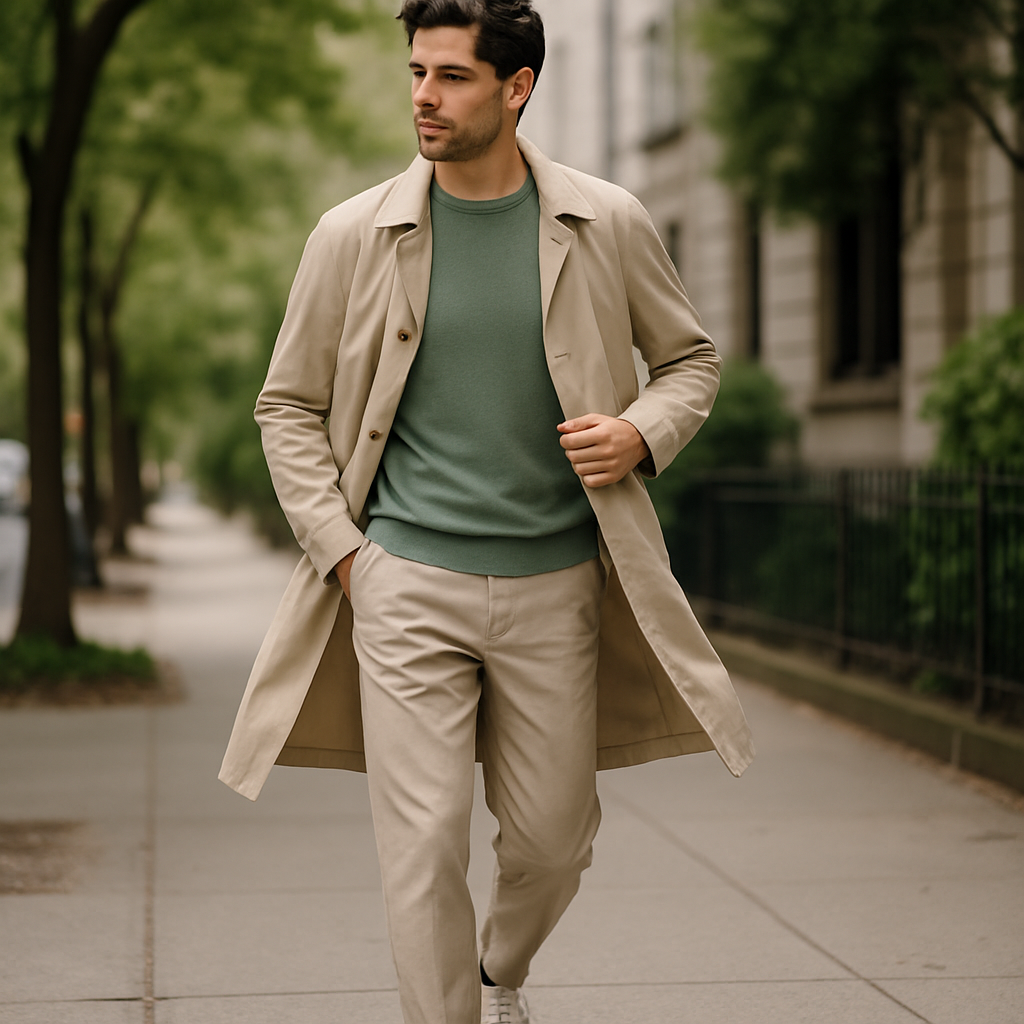
Good men’s spring outfits feel put together without being overcomplicated. A restrained palette, balanced proportions and versatile garments make unpredictable weather easier to dress for. With a few well-chosen pieces, men’s spring outfits can stay comfortable and polished all season.